





What Happens When an Aircraft Gets Cold?
 Jul 02, 2026|
 Table of Contents
- Introduction: Why Don't Aircraft Freeze at -40°C?
- Ice Detection – The Aircraft Is More Sensitive Than Weather Forecasts
- Wing Anti-Ice – Stopping Ice Before It Starts
- Engine Nacelle Anti-Ice – Protecting the Aircraft's "Heart"
- Windshield Heating – Giving Pilots a Clear View
- Summary: The Invisible Shield That Keeps You Safe
1. Introduction: Why Don't Aircraft Freeze at -40°C?
Ever looked out the window during a flight and wondered-at 30,000 feet, with outside temperatures plunging to -50°C and the aircraft flying through moisture-laden clouds, why doesn't ice bring the plane down?
The answer lies in the sophisticated anti-icing and de-icing systems built into every commercial aircraft.
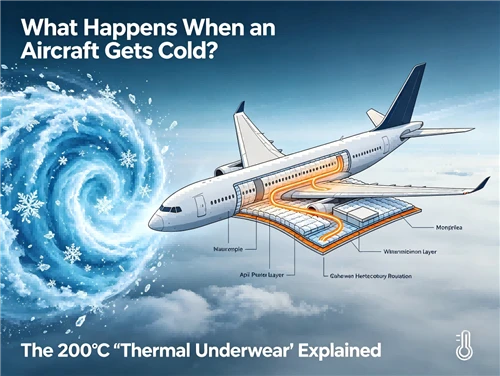
Ice is one of aviation's oldest and most dangerous enemies. A thin layer of ice on a wing can reduce lift by up to 30% and increase drag by 40% . That's why modern aircraft are equipped with multiple layers of protection-a "thermal underwear" system that keeps critical surfaces warm and ice-free.
Let's dive into the technology that keeps you safe at 30,000 feet.
2. Ice Detection – The Aircraft Is More Sensitive Than Weather Forecasts
Many passengers don't realize that before every takeoff, ground crews perform dedicated checks of the aircraft's ice detection systems.
How It Works:
Ice detection relies on sensors distributed across critical locations-wing leading edges, engine inlets, and other high-risk surfaces. These sensors continuously monitor:
Surface temperature
Ambient conditions (temperature, humidity)
Ice accretion (detecting even microscopic buildup)
Once the system detects a potential icing risk, it triggers visual and audible warnings in the cockpit, alerting the flight crew to activate the appropriate anti-icing systems.
Next-Generation Technology – Forward-Looking Ice Detection
Modern aircraft like the Boeing 787 Dreamliner and Airbus A350 take it a step further. They are equipped with Forward-Looking Infrared (FLIR) ice detection systems:
| Feature | Benefit |
|---|---|
| Sees ahead | Detects supercooled water droplets in clouds before the aircraft enters them |
| Pre-emptive | Allows pilots to activate anti-icing systems proactively, not reactively |
| All-weather | Works in day/night and all weather conditions |
Your aircraft has a better "sense of ice" than weather forecasts. It knows when freezing conditions are approaching before you feel a single bump.
3. Wing Anti-Ice – Stopping Ice Before It Starts
The wing is the heart of lift generation. Even a rough ice buildup on the leading edge can dramatically reduce lift and increase stall speed-a potentially catastrophic combination.
The Primary Solution: Hot Air (Bleed Air) Anti-Ice
Most commercial aircraft use thermal anti-icing (TAT) technology. Here's how it works:
| Step | Description |
|---|---|
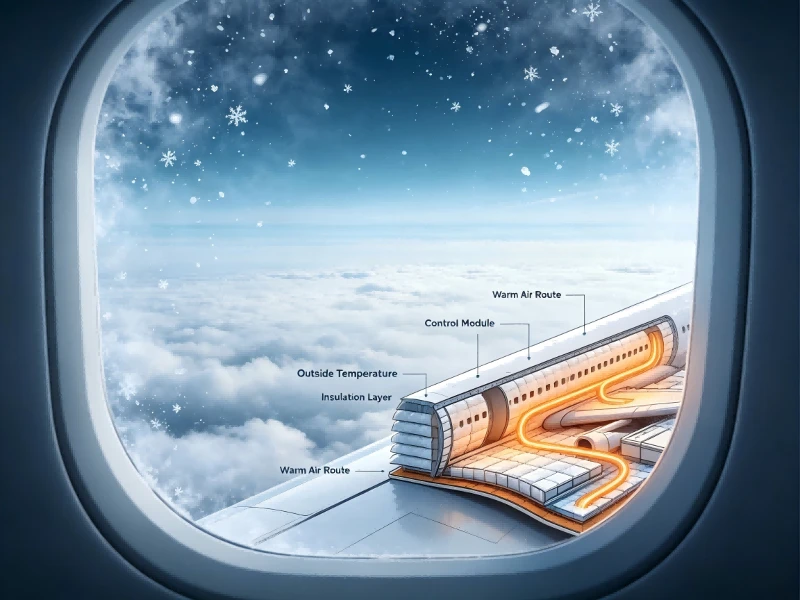
| 1. Bleed Air | Hot air (approximately 200°C) is drawn from the engine compressor section (a process called "bleed air") |
| 2. Distribution | The hot air is routed through a network of ducts to the leading edge cavities of the wings |
| 3. Heating | The hot air heats the wing's internal structure, warming the leading edge surface enough to prevent ice from forming |
The system runs continuously during flight in known icing conditions, ensuring the wing's aerodynamic shape remains intact.
Different Approaches by Aircraft Type:
| Aircraft | Anti-Ice System | Details |
|---|---|---|
| Airbus A320 Series | Thermal Anti-Ice (TAT) | Bleed air heating the wing leading edges |
| Boeing 737 NG | Pneumatic De-Ice Boots | Rubber boots that inflate periodically to crack off accumulated ice (backup to hot-air systems) |
Critical Ground Protocol:
Important: Anti-icing systems are designed to prevent ice, not remove thick ice.
If snow, frost, or ice accumulates on the wings while the aircraft is on the ground-even just a thin layer-it must be completely removed before takeoff.
Special de-icing fluids (typically heated Type I or Type IV fluids) are sprayed on the aircraft
This is a mandatory ground procedure that can delay flights but never compromises safety
Cold Fact: A layer of ice as thin as a piece of sandpaper (just 1mm) can reduce lift by up to 30% and increase drag significantly-which is why ground de-icing is strictly enforced!
4. Engine Nacelle Anti-Ice – Protecting the Aircraft's "Heart"
The engine nacelle (the aerodynamic housing around the engine) must also be protected from ice. Icing at the engine inlet can:
Disrupt airflow entering the engine
Reduce thrust output
Cause FOD (Foreign Object Damage) as ice chunks break off and are ingested
Damage fan blades and compressor components
Traditional Approach: Bleed Air Anti-Ice
Older and many current-generation aircraft use bleed air systems for the engine nacelle, similar to wing anti-ice. Hot air is routed around the inlet lip to keep the surface warm.
Next-Generation Solution: Electric Heating
The Boeing 787 Dreamliner pioneered a more efficient approach for engine nacelle ice protection:
| Feature | Electric Heating (B787) | Bleed Air (Traditional) |
|---|---|---|
| Heat Source | Electric heating elements embedded in the inlet lip | Hot bleed air from the engine compressor |
| Efficiency | More energy-efficient-uses electrical power from generators | Less efficient-saps engine performance |
| Precision | Highly precise temperature control | Less precise |
| Weight | Lighter system (no heavy hot-air ducts) | Heavier plumbing |
Industry Trend: Electric anti-icing is the future. By moving away from bleed air, aircraft can achieve better fuel efficiency and reduce maintenance complexity.
5. Windshield Heating – Giving Pilots a Clear View
The windshield is the pilot's window to the world-and at -50°C, it's prone to fogging, frosting, and icing. A clear view isn't optional; it's mandatory for safe operation.
How Windshield Ice Protection Works:
Modern aircraft windshields are multi-layer laminated glass assemblies with an integrated heating layer:
| Component | Function |
|---|---|
| Conductive Coating | A transparent, conductive film (typically gold or indium tin oxide) is embedded between glass layers |
| Electrical Current | When power is applied, the conductive layer heats up uniformly across the entire windshield surface |
| Heating Effect | The windshield stays well above freezing, preventing both ice and fog from forming |
| Wipers & Water Repellents | During heavy rain, windshield wipers and hydrophobic coatings work together to ensure clear visibility |
Air vs. Ground: How It Compares
| Feature | Aircraft Windshield Heating | Car Rear-Window Defroster |
|---|---|---|
| Heating Method | Transparent conductive film embedded in glass | Resistive wires (visible lines) |
| Power Output | Several kilowatts (3–5 kW per windshield) | ~150–250 watts |
| Temperature | Keeps glass at ~40–50°C (above freezing) | Warms just enough to melt frost |
| Reliability Standard | Aerospace-grade (fail-safe redundancy) | Automotive grade |
🛩️ The difference is massive: Aircraft windshield heating is orders of magnitude more powerful and reliable than anything you'll find in your car. Pilots get a completely clear, unobstructed view in all weather conditions.
6. Summary: The Invisible Shield That Keeps You Safe
| System | Core Technology | Purpose |
|---|---|---|
| Ice Detection | Surface sensors + Infrared (FLIR) | Early warning and proactive system activation |
| Wing Anti-Ice | Bleed-air (200°C) / Pneumatic boots | Prevents ice buildup on critical lifting surfaces |
| Engine Nacelle Anti-Ice | Bleed air / Electric heating | Protects engine inlet from airflow disruption and FOD |
| Windshield Heating | Conductive coating + Electrical heating | Maintains clear pilot visibility in all conditions |
| Ground De-Icing | Heated de-icing fluids | Mandatory removal of snow/frost/ice before takeoff |
Next Time You Fly, Remember This:
Your aircraft's "thermal underwear" runs at 200°C inside the wing cavities
The ice detection system knows you're entering icing conditions before you see a single cloud
Ground de-icing isn't an inconvenience-it's a life-saving procedure
The windshield heating in the cockpit is more powerful than 20 car defrosters combined
Electric anti-icing on the 787 represents the future of more efficient, more reliable ice protection
Final Thought
Flying through freezing clouds at 30,000 feet sounds terrifying-until you understand the incredible engineering that protects you. From bleed-air systems carrying 200°C heat to the wings, to infrared sensors that "see" ice before it forms, to electric heating elements embedded in engine inlets, the anti-icing and de-icing systems work silently and tirelessly.